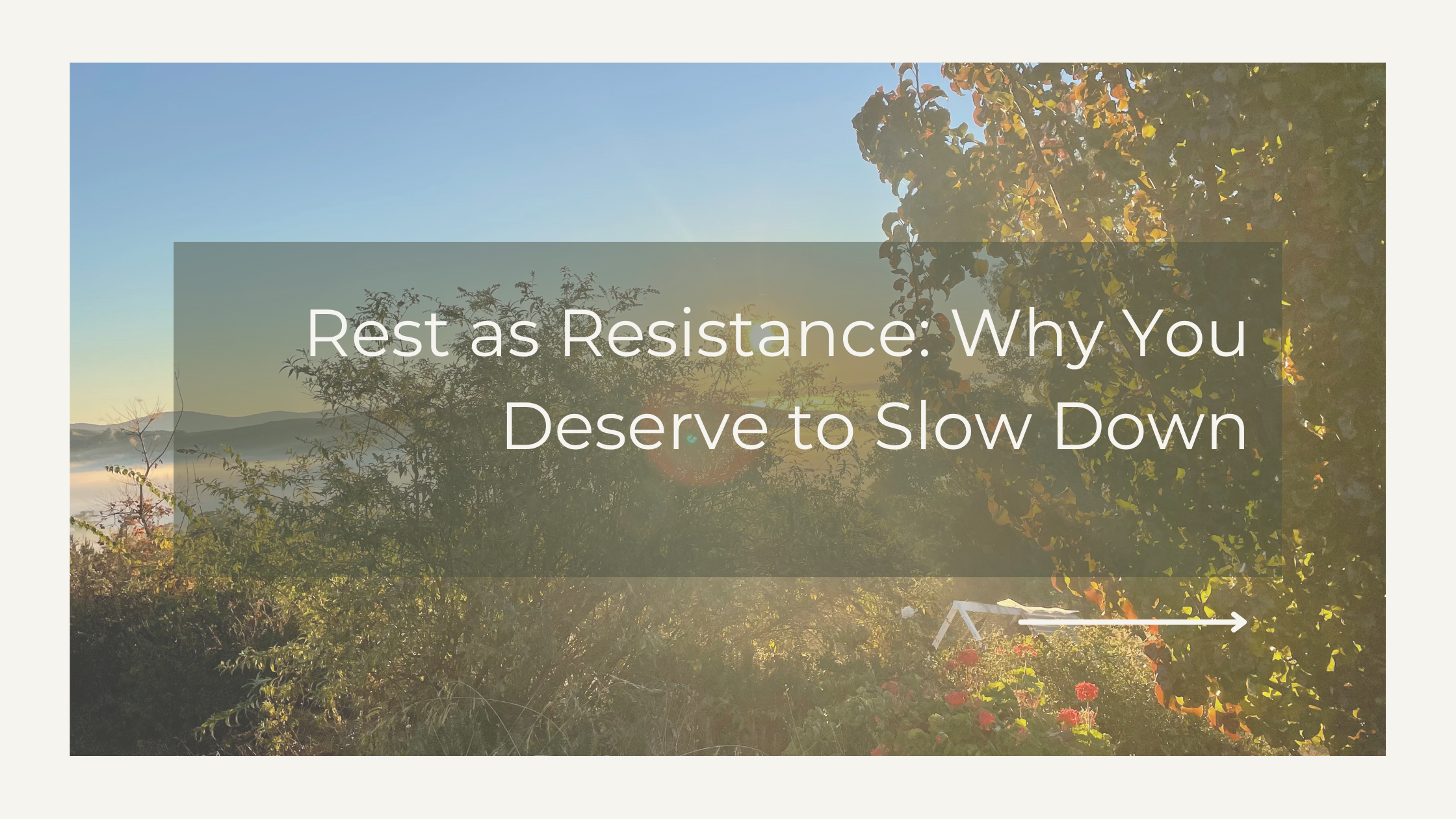
Rest as Resistance: Why You Deserve to Slow Down
The Guilt Around Rest As the year winds down, many people dream of slowing down, of quiet mornings, long lunches, or time in the paddock…
The Guilt Around Rest
As the year winds down, many people dream of slowing down, of quiet mornings, long lunches, or time in the paddock with no phone signal. But when the moment finally comes, rest can feel… uncomfortable. You sit still for five minutes and suddenly remember the chores undone, the messages unanswered, the lists waiting for January.
Sound familiar?
In rural and regional communities especially, rest often carries a hidden weight of guilt. There’s a deep cultural value placed on hard work, reliability, and showing up — for your family, your community, and your job. It’s a strength that holds towns together, but it can also make slowing down feel selfish or indulgent.
When we grow up hearing messages like “You can rest when the work’s done” or “Everyone’s counting on you,” we learn to equate rest with laziness — even when our body is begging us to stop. The problem is, the work is never really “done.” There’s always one more thing to tick off, one more way to prove your worth.
At Regenerative Psychology, we often see how this mindset leads to chronic stress and burnout, people running on empty because they’ve been taught that stopping is a weakness. But rest isn’t the opposite of productivity; it’s the foundation of it.
You don’t have to earn the right to rest. You don’t need to justify your need for quiet or recovery.
Rest is how we restore the energy, clarity, and compassion we need to keep doing the work that matters. It’s not a reward for surviving the year, it’s a basic human need that allows you to begin again.
The Physiology of Recovery
Rest isn’t just a mindset, it’s a biological necessity. Our bodies are wired to cycle between periods of activation and recovery. When we push through exhaustion, skip meals, or ignore signs of fatigue, we’re not being “strong”; we’re overriding a system that’s designed to keep us alive and well.
Think of your nervous system like the land after a long season. The sympathetic nervous system, the part responsible for energy, focus, and action, is like the summer crop. It grows fast, demands constant input, and can yield great results in short bursts. But if you never rotate the fields or let the soil rest, it becomes depleted. Productivity drops, resilience weakens, and recovery takes longer each time.
That’s what happens in the body too.
The parasympathetic nervous system — our “rest and digest” mode — is what restores balance. It slows the heart rate, steadies breathing, and allows digestion, healing, and repair to take place. Without activating this system regularly, the stress cycle never completes. Instead, we end up in a constant state of mild threat, where even small challenges feel overwhelming.
At Regenerative Psychology, we often talk about regulation before resilience. You can’t build strength or capacity without first creating safety, both in your body and your environment. True resilience isn’t about pushing harder. It’s about knowing when to pause, breathe, and reset.
When you begin to view rest as part of the natural rhythm of growth — not an interruption to it — you start to see it as a powerful act of self-leadership. You’re choosing to nurture your system, to work with your body rather than against it.
How to Practise Rest (Without Feeling Lazy)
Rest doesn’t have to mean a week away or a full afternoon nap, though both are lovely if they’re available. True rest is about giving your body and mind permission to step out of the constant cycle of doing. It’s about creating small, regenerative moments throughout your day and noticing how they shift your energy.
Here are a few ways to start:
1. Redefine Productivity
Instead of measuring your day by what you achieved, try noticing what you experienced. Did you feel present? Connected? Kind to yourself?
When we redefine productivity to include presence and care, rest naturally becomes part of the work.
2. Schedule Small Pauses
You don’t need to wait for burnout to rest. Micro-pauses, like sitting with a cup of tea before opening emails, or a five-minute stretch between sessions can help regulate your nervous system and prevent depletion. Consistency matters more than duration.
3. Choose Rest That Fits Your Nervous System
Rest looks different for everyone. Some people restore through quiet and solitude, others through connection or creativity. Notice what actually feels restful to your body, not what you think should.
4. Practise Permission
If guilt shows up when you rest, try meeting it with curiosity rather than criticism. Ask, “Who taught me that rest is lazy?” or “What would I say to a friend who felt guilty for taking a break?”
Often, rest becomes easier when we realise we’re unlearning old patterns, not failing at new ones.
5. Anchor in Nature
For many rural Australians, rest can be found in small, grounding moments, feeding the animals slowly, walking at sunset, or noticing the change in light after rain. These moments invite presence without needing perfection or performance.
Rest isn’t something you have to earn. It’s something you can practise, gently, imperfectly, and often. Each time you do, you’re choosing to restore the soil that sustains you.
Rest as a Radical Act
In a world that celebrates constant motion, choosing to rest is an act of quiet rebellion. It’s saying, “I believe my worth isn’t defined by what I produce.”
It’s honouring the seasons of your own life — not just the harvest, but the fallow periods too.
When we allow rest, we begin to live more sustainably, in our bodies, our relationships, and our communities. We stop seeing exhaustion as normal and start recognising that recovery is what allows us to show up fully. It’s how we move from surviving to regenerating.
At Regenerative Psychology, we believe wellbeing is cyclical. Just like the land, people need time to recover, restore, and renew. Whether it’s learning to recognise stress before it tips into burnout, or reconnecting with what nourishes you, our work is about helping you find steadier rhythms, ones that work with your nervous system, not against it.
If this time of year has left you feeling tired, stretched, or disconnected, that’s okay. You don’t need to fix everything before January. You can start by pausing, breathing, and remembering: rest is not avoidance — it’s repair.
You deserve to slow down. You deserve to begin again.